A versatile energy carrier
Hydrogen can serve as an industrial feedstock, a fuel and a means of carrying energy between production and use. Those roles should be distinguished when considering a project. Replacing an existing industrial hydrogen supply presents different questions from introducing hydrogen into a new transport or power application. The starting point is therefore the demand: who will use the hydrogen, what quality is required and whether the proposed supply can reliably meet that requirement.
Hydrogen does not provide an environmental benefit simply because of its name. Its production route, energy inputs, transport and final use all influence the overall result. A credible assessment looks at the full chain and compares it with a realistic alternative. This approach moves the discussion beyond broad labels and towards the engineering, commercial and operational conditions that determine whether a particular application makes sense in a wider energy system.
Understanding production pathways
Hydrogen can be produced through several routes, including processes using hydrocarbon feedstocks and electrolysis of water. Each route has different requirements for energy, equipment and supporting infrastructure. Where carbon capture forms part of a proposal, its scope and performance need clear definition. Where electricity drives production, the characteristics of that supply are central to both operating cost and the associated emissions. Production choices should be evaluated using transparent boundaries and consistent assumptions.
Common colour descriptions can make an initial conversation easier, but they are not a substitute for project data. Two projects described with the same label may differ substantially in electricity sourcing, upstream impacts or capture arrangements. Useful comparisons state the production method, the basis of emissions calculations and the conditions under which the plant will operate. This enables customers, engineers and investors to discuss the same proposition instead of relying on different interpretations of a marketing term.
Electrolysis and its supporting systems
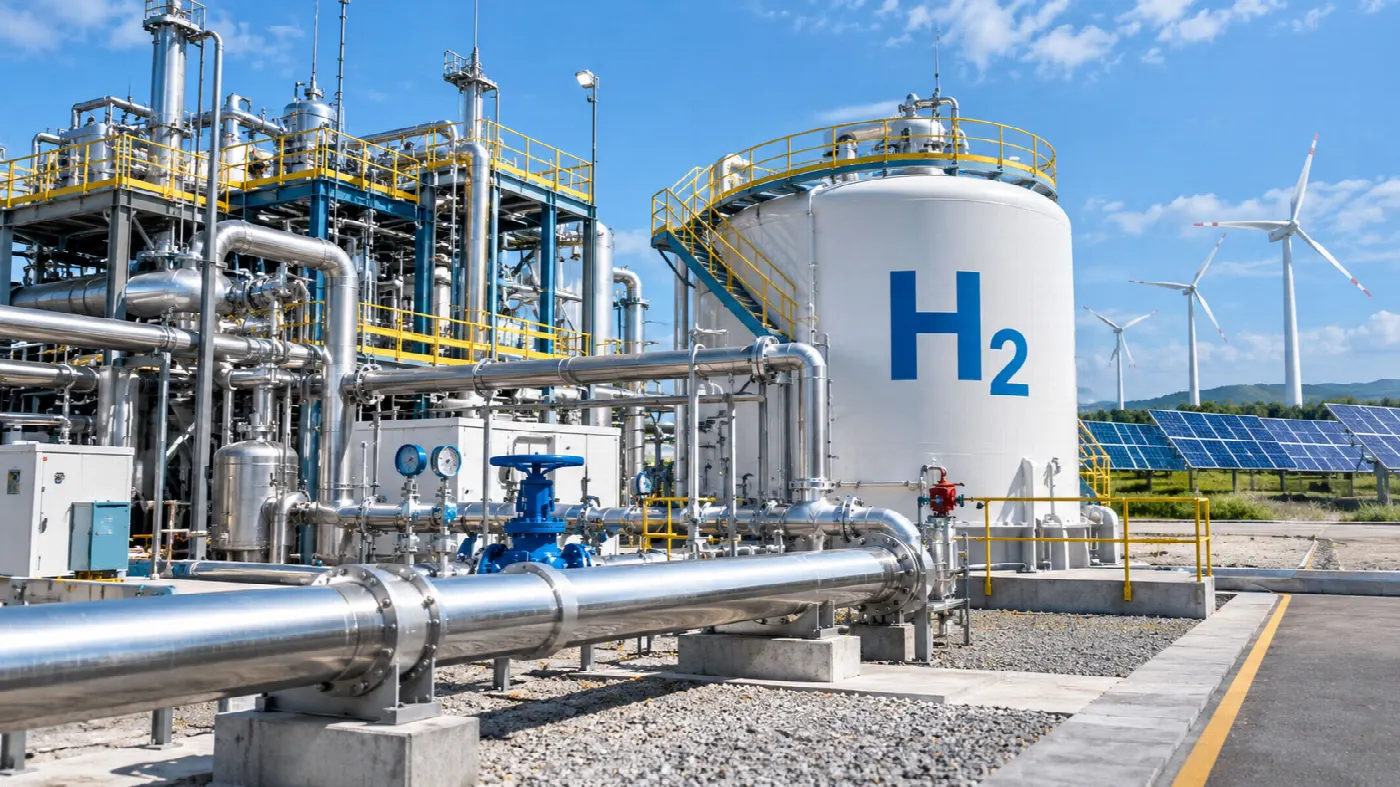
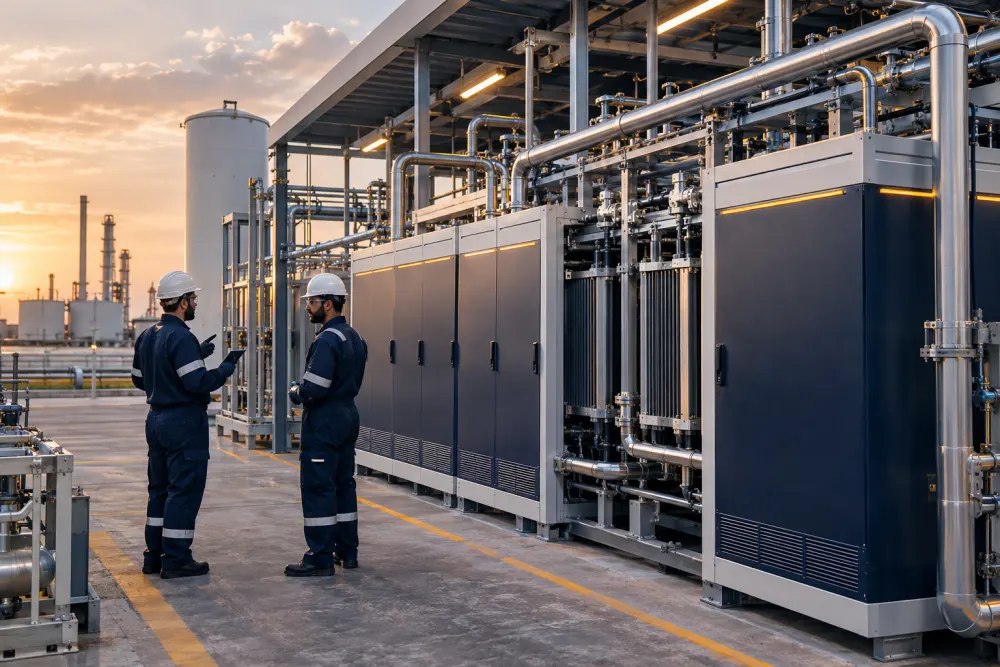
An electrolyser is only one part of an electrolysis installation. Water treatment, electrical conversion, cooling, gas handling, controls and safety arrangements all contribute to the complete facility. The chosen technology affects operating characteristics and integration requirements. Project teams need to understand how the equipment responds to the intended electricity supply and demand profile, including periods when production changes. A nominal equipment rating alone does not describe the performance of the whole installation.
Water availability and quality also need realistic evaluation. The relevant demand includes treatment and supporting services as well as the reaction itself, depending on the plant design. Site planning must account for these connections and for maintenance access around equipment. Considering the balance of plant early helps avoid a design in which the central package is well specified but essential utilities, interfaces or operating responsibilities remain unresolved until late in delivery.
Assessing the electricity relationship
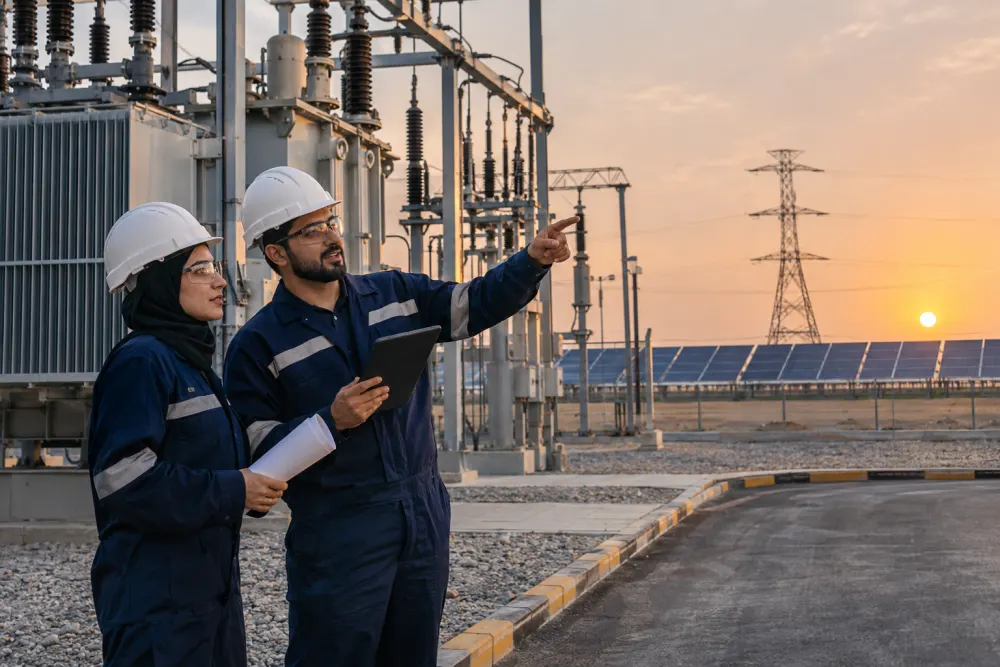
For electrically produced hydrogen, the relationship with the power system can shape the project. A facility supplied by variable generation has different scheduling and storage questions from one designed for steady operation. Contractual arrangements, network availability and the operating characteristics of the electrolyser all influence how production is organised. The assessment should use a realistic operating profile rather than assuming that a plant can always run at its rated capacity whenever demand exists.
The electricity question also affects environmental claims. The source and timing of supply, and the accounting method used, should be explained when reporting performance. A project may have attractive equipment efficiency while still depending on an electricity mix that changes its overall emissions profile. Keeping technical performance and environmental accounting connected allows decision-makers to evaluate trade-offs openly and prevents a narrow equipment metric from standing in for the performance of the complete supply chain.
Storage and transport choices
Hydrogen has a low volumetric energy density under ordinary conditions, so storage and transport require deliberate engineering choices. Compression, liquefaction and conversion into other carriers each introduce equipment, energy requirements and operating considerations. The appropriate route depends on quantity, distance, delivery frequency and the needs of the receiving facility. A solution suitable for a nearby industrial user may be unsuitable for moving energy across a much longer supply chain.
The receiving side is just as important as the production site. Unloading, storage, conditioning and any conversion back to a usable form must be included in the comparison. Losses and utility requirements across these stages can influence the delivered cost and environmental performance. Infrastructure decisions should therefore be made around an end-to-end supply model, with clear interfaces between organisations, rather than by optimising production in isolation and treating delivery as a later logistics problem.
Materials and equipment compatibility
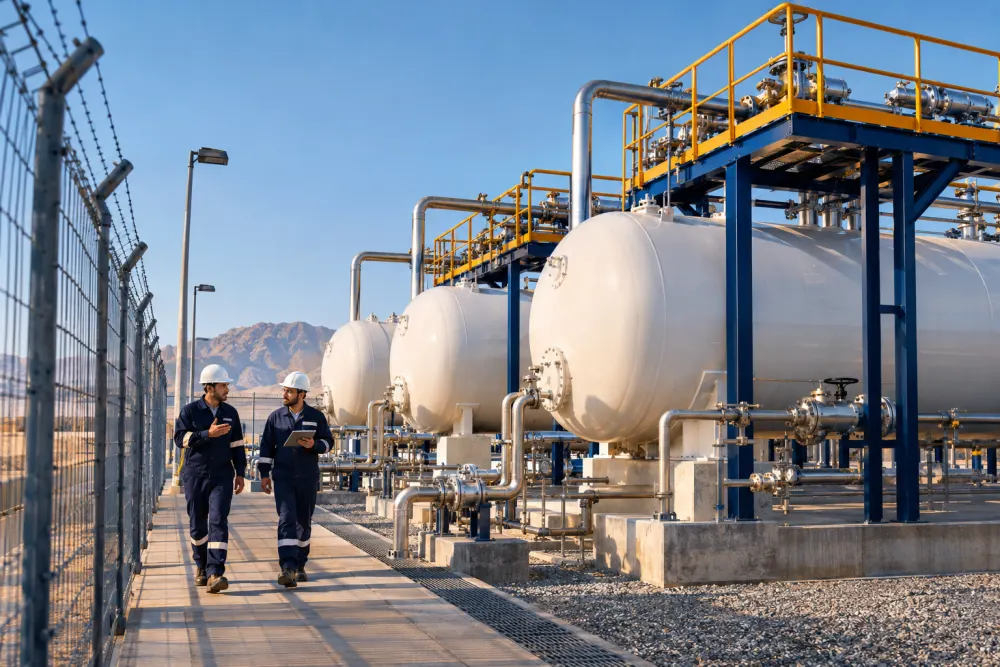
Hydrogen service requires a specific assessment of materials, seals, joints and equipment. Existing gas infrastructure cannot be assumed suitable merely because it has handled another gas successfully. Material behaviour depends on factors including pressure, temperature, loading and the particular component. Engineering review must address the proposed duty and the relevant standards, supported by suitable manufacturer information and testing where required. This is especially important when considering changes to existing equipment or networks.
Compatibility also includes the functional performance of valves, instruments and protective systems. Leakage characteristics, measurement capability and maintenance requirements may differ from familiar applications. Procurement documents should clearly identify hydrogen service and the intended operating envelope so suppliers can assess suitability. A complete equipment package includes traceable documentation and defined acceptance criteria, helping the owner avoid uncertainty about whether an apparently similar component is actually appropriate for the intended use.
Safety through integrated design
Hydrogen projects require a coordinated safety approach covering prevention, detection, ventilation, ignition control and emergency arrangements as appropriate to the installation. These measures need to be developed through qualified assessment of the specific facility. A generic checklist cannot replace an understanding of where hydrogen may be present, how it could be released and how people and equipment could be affected. Layout and access decisions are therefore part of safety planning from the outset.
Operating procedures, training and maintenance must support the design intent. People need to understand the equipment they are responsible for and the arrangements for reporting abnormal conditions. Changes to the installation or its operating regime require review rather than informal adaptation. Safety is strengthened when engineering assumptions remain visible to the operating team, with documentation and inspection tasks that preserve the intended protective measures throughout the facility's life.
Matching hydrogen to useful applications
Industrial users already familiar with hydrogen may offer a different development pathway from applications requiring entirely new equipment and distribution systems. In each case, the evaluation should consider the service being provided and the alternatives available. Direct electrification, efficiency improvements or other energy carriers may be relevant comparisons. Hydrogen is most usefully discussed as one option within a practical decision, with its strengths and limitations considered against the requirements of that application.
Demand certainty matters as well. A production facility needs a credible route to customers whose quality, volume and delivery requirements are understood. Prospective users need confidence that supply will remain dependable and that their own equipment can accommodate it. Developing these two sides together helps identify missing infrastructure and commercial dependencies early. It also reduces the risk of a technically capable production project being disconnected from the market it was designed to serve.
Looking at the complete project case
The economics of hydrogen depend on more than the purchase price of the production package. Energy, utilisation, water, maintenance, storage, transport and financing all contribute to delivered cost. The balance changes between projects, so a headline cost figure without a defined boundary can be misleading. Sensitivity analysis is useful because it shows which assumptions have the greatest influence and where the project needs stronger evidence before a major commitment is made.
Project development should also address permitting, land, utility connections, supply agreements and the responsibilities at each interface. These elements often determine whether a concept can become a functioning installation. A phased approach can help validate demand and operating assumptions, provided each stage has a clear purpose and evaluation criteria. Progress is best demonstrated through resolved dependencies and credible performance evidence rather than through capacity announcements alone.
Turning interest into a defined requirement
A useful hydrogen discussion begins with the intended application, required volume and quality, delivery conditions and available site infrastructure. It should also identify the alternatives being considered and the environmental objective the project is expected to support. With that information, the team can determine which technical questions need specialist assessment and which assumptions require validation. Clear requirements make equipment and supply proposals easier to compare on a consistent basis.
Petrodubai approaches energy-sector conversations through this practical connection between service conditions, equipment requirements and operational needs. For hydrogen, that means recognising both the opportunity and the work needed to establish a suitable application. Its place in the future energy mix will be shaped by projects that connect dependable demand with appropriate production, safe infrastructure and transparent performance assessment across the complete chain.