
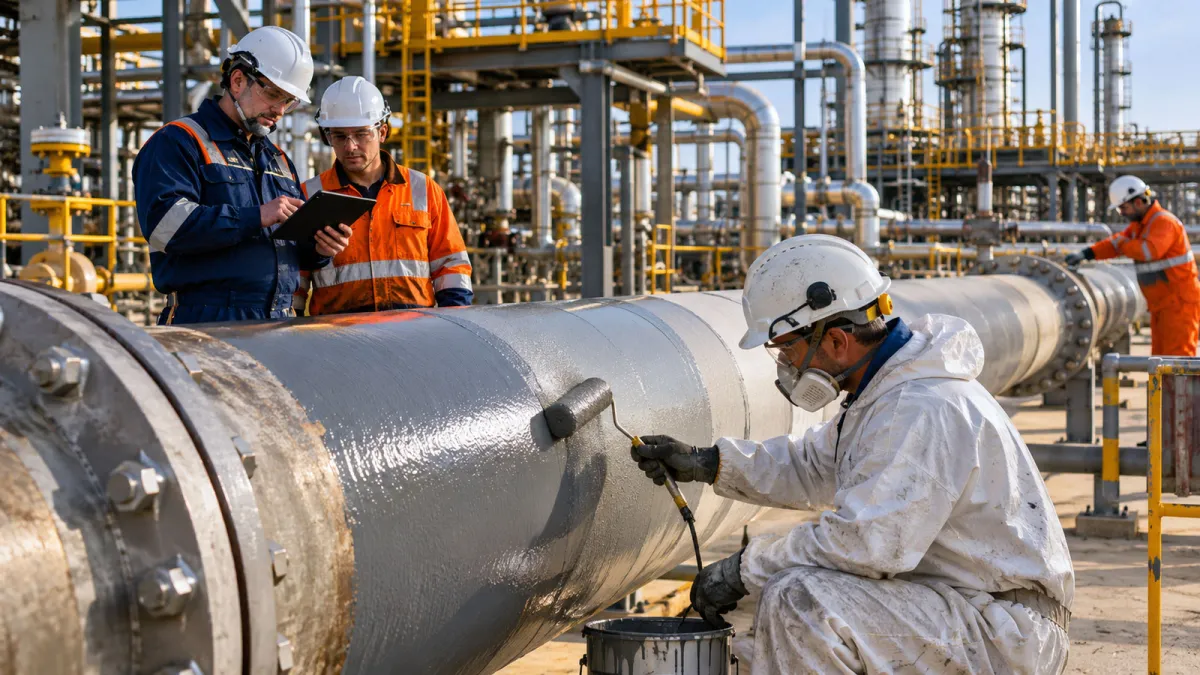
Corrosion protection begins with the operating environment
Corrosion protection is sometimes treated as a choice between paint products. In an industrial facility, it is better understood as a system of decisions involving the substrate, its environment, the protective materials and the way their condition will be maintained. A coating that performs well in one application may be unsuitable in another. The starting point is therefore the asset and its service, not the appearance of a finished surface.
Oil and gas infrastructure can encounter moisture, salt exposure, chemicals, temperature changes and mechanical damage. These conditions may vary significantly within the same facility. A sheltered structural member, an exposed pipe support and a surface beneath insulation do not necessarily face the same problem. A useful protection plan identifies those differences and avoids applying one generic specification simply because it is convenient for purchasing.
Define the asset before selecting a protective system
A clear asset description includes the substrate material, current condition, service environment and expected access for maintenance. Existing coatings and repair history also matter. If the work involves an operating facility, the available work area and shutdown constraints can influence what is practical. These details help a specialist assess compatible options and identify information that must be confirmed before the specification is finalised.
The intended outcome should be equally clear. A local repair, a full refurbishment and protection for newly fabricated equipment may require different approaches. A specification should explain what the system needs to achieve rather than rely only on a product name. This allows the client, manufacturer, applicator and inspector to discuss the same acceptance basis. Unclear requirements can create disputes even when everyone believes they are delivering a reasonable result.
Surface preparation is part of the protection system
A coating depends on the surface to which it is applied. Contamination, deteriorated material and an unsuitable surface condition can interfere with performance. AMPP treats surface preparation as a distinct technical discipline, with methods and standards selected for the material and intended coating. The preparation requirement should therefore be established as part of the specification, not left as an informal activity immediately before application.
Inspection needs to address the relevant characteristics of the prepared surface. Depending on the system and project, these may include cleanliness, profile and contamination. The agreed methods and acceptance criteria should come from the applicable specification and manufacturer guidance. A visually bright surface does not answer every question about its suitability. The work plan should allow time for checks and corrective action before the prepared area is covered by subsequent layers.
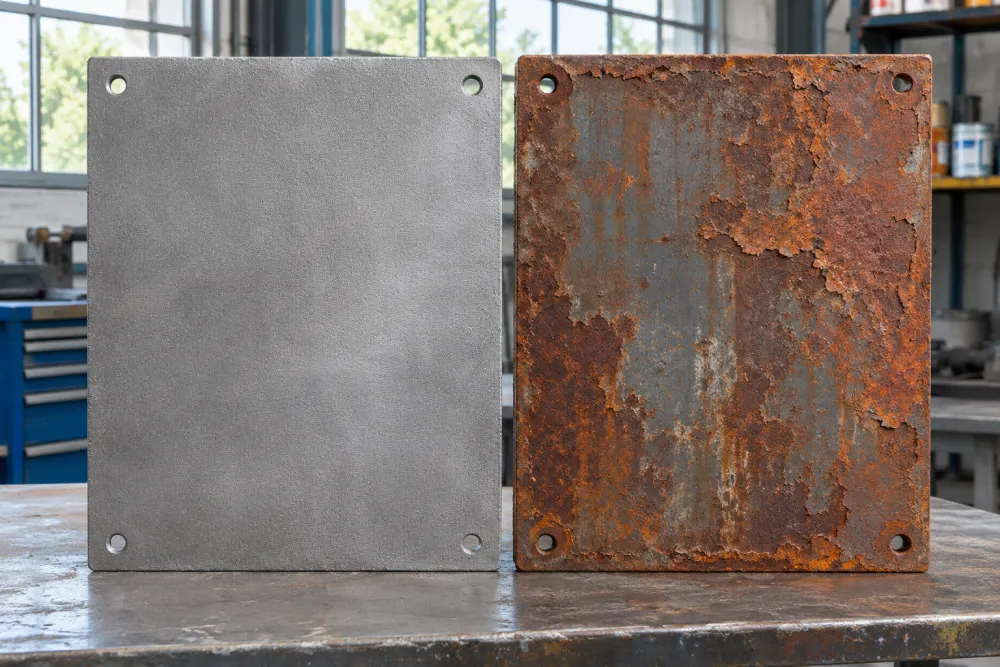
Choose a compatible system rather than an isolated product
Protective systems may contain several layers with different functions. Compatibility between the substrate, primer, intermediate coat and finish matters, as does compatibility with an existing coating when a repair is proposed. The selected arrangement needs to match the exposure and application conditions. Product literature is useful, but a general description should not be read as confirmation that every combination of materials will work together.
The manufacturer's technical information should be reviewed alongside the project requirements. Application limitations, preparation expectations and inspection requirements need to be understood by the people doing the work. Substituting one material for another can change those requirements. A controlled review of proposed changes is more reliable than assuming that products with similar names or colours are interchangeable. The objective is a coherent system with a documented basis for its use.
Application conditions must be planned and recorded
The environment during application can affect the result. Temperature, humidity, surface condition and the time available between stages may all influence whether work can proceed under the agreed specification. These factors should be part of planning, especially in exposed locations where conditions can change during a shift. Scheduling work without considering these constraints can create pressure to continue when the required conditions are not available.
Records should connect the area treated, the materials used and the conditions under which the work was performed. This does not need to become paperwork without purpose. Its value is that a later investigation can distinguish between possible causes instead of relying on memory. If an area requires repair, a useful record also helps identify what is already present and what compatibility checks are needed before additional material is applied.
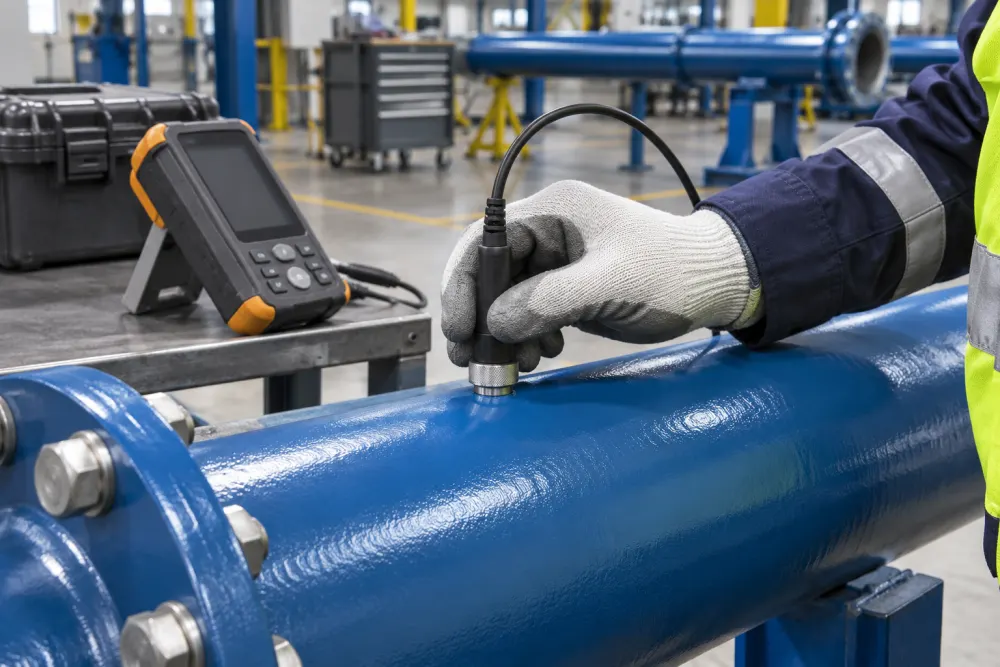
Inspection should follow the work, not only the finish
A final visual review cannot establish everything that happened during preparation and application. Inspection is more effective when planned around stages at which important conditions can still be observed. The project should define who performs checks, who reviews the results and when work may continue. Clear responsibilities help prevent a missed inspection from becoming an argument after the surface is no longer accessible.
Coating thickness is one example of a measurable characteristic, but a reading has meaning only in relation to the relevant system and measurement method. More material is not automatically better, and one acceptable reading does not represent an entire structure. AMPP's inspection guidance highlights the role of measurement in checking protective work. The correct sampling, acceptance and corrective-action arrangements should be established for the actual project rather than improvised at the end.
Corrosion under insulation requires a wider view
Insulation can conceal the condition of the surface beneath it. When moisture reaches an insulated system, the resulting risk depends on the material, operating conditions and the insulation assembly. This is why corrosion under insulation cannot be assessed simply by looking for rust on an exposed pipe nearby. The external jacket, penetrations and areas where water may enter or remain are part of the inspection discussion.
A suitable assessment may require specialist methods and planned access to selected areas. The purpose is to understand the asset's condition without assuming that an intact-looking exterior proves the absence of deterioration. Repair planning should consider both the underlying protection and the insulation system that surrounds it. Replacing an outer covering without addressing the reason moisture entered can leave the original problem unresolved. The appropriate scope must follow the findings.
Coastal exposure makes details important
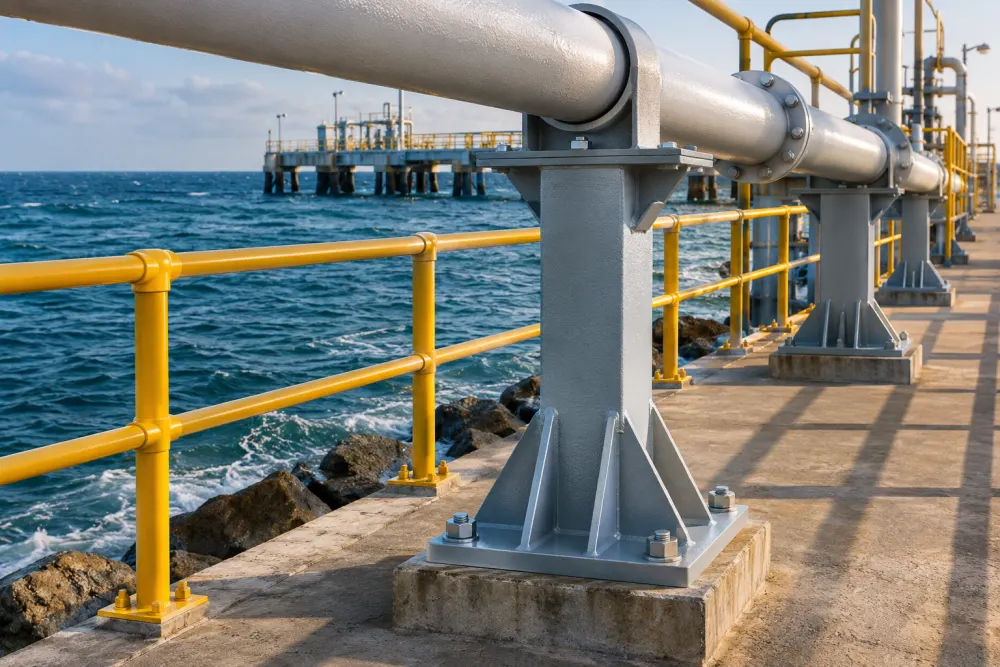
Marine and coastal environments can place sustained demands on protective systems. Salt deposition, wetting and drying, access restrictions and mechanical wear may interact. Small details such as edges, connections and supports can deserve particular attention because geometry and exposure influence how a system is applied and maintained. An asset should be reviewed as a set of real surfaces and interfaces, not only as a total area to be coated.
Maintenance access should be considered before the work is priced. Reaching an elevated structure or a difficult section of a jetty can require arrangements that affect the project more than the coating material itself. A proposal that ignores access may appear inexpensive while leaving a large part of the actual requirement undefined. Clarifying these conditions early supports a more realistic programme and a meaningful comparison between possible approaches.
Plan repairs around condition and consequence
Protective coatings have to be monitored throughout service. Damage may be local, while other changes can indicate a wider pattern that deserves investigation. A maintenance plan should distinguish between an isolated defect and evidence that the system is no longer suitable for the exposure. The decision to repair locally or undertake broader work should be supported by the condition assessment and the consequences of continued deterioration.
Useful records describe location, extent and observations in a way that can be compared during later reviews. Photographs become more valuable when linked to an asset identifier and a clear description. The inspection interval should reflect the asset's risks and applicable requirements, not an arbitrary universal schedule. Maintenance decisions also need to account for access and operating windows so that identified work can be turned into a practical, authorised programme.
Build a clear brief for protective work
A strong project brief brings together the asset description, operating environment, existing condition, available access and required outcome. It identifies the standards and manufacturer information that will guide the work and explains how acceptance will be assessed. Where information is incomplete, that uncertainty should be visible in the scope. A clear brief allows technical questions to be resolved before they become costly changes during execution.
Petrodubai's service areas include protective coating, corrosion control, maintenance and industrial piping support. A useful inquiry can begin with the equipment type, exposure conditions and a description of the problem. Drawings, photographs and previous maintenance information can then be shared through an appropriate channel. Effective corrosion protection depends on connecting material selection with preparation, application, inspection and ongoing care. Treating those activities as one coordinated process gives the project a stronger foundation than choosing a coating in isolation.