Passive protection for critical industrial assets
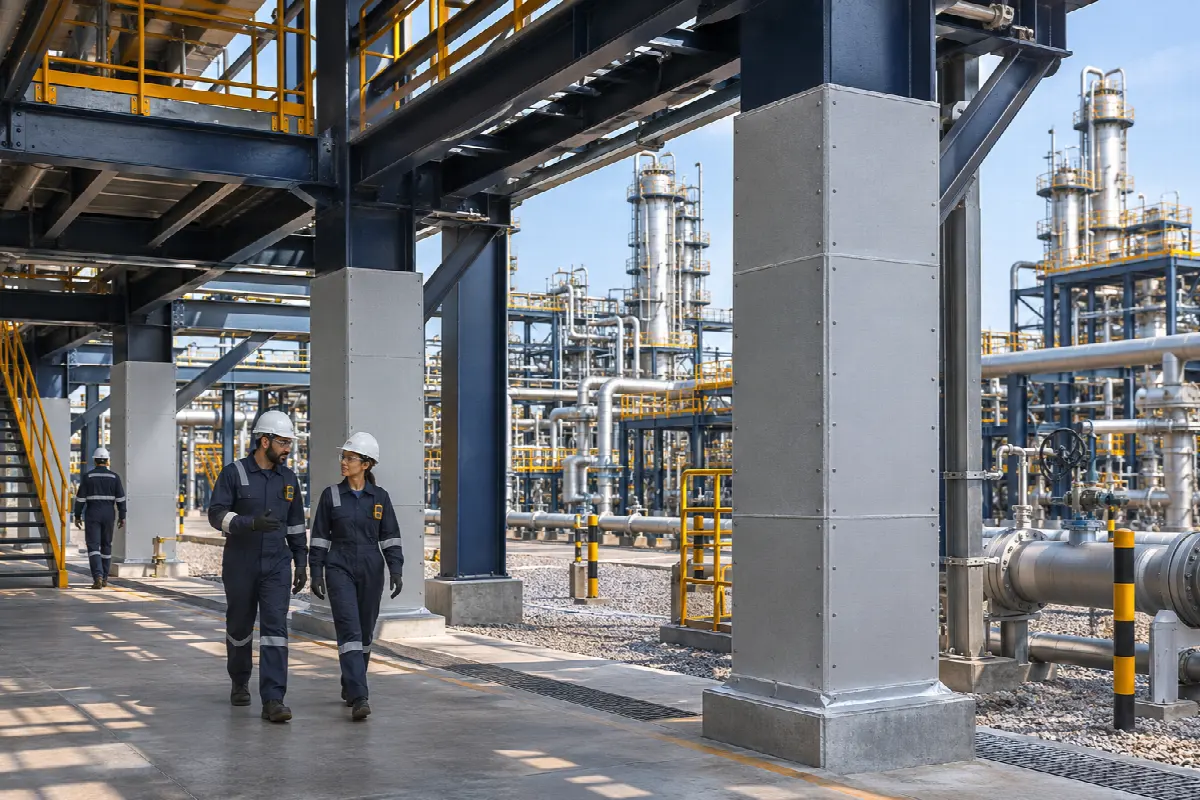
Industrial fire protection begins with understanding what must remain protected and under which design conditions. Petrodubai's service focus is passive fire protection for industrial structures and equipment, approached as part of the facility's wider safety design. The purpose is to support the required resistance of identified assets during a defined exposure. It is not a substitute for understanding the process, maintaining other protective measures or following the facility's established safety arrangements.
A useful scope connects the protection objective with the actual structure, equipment and operating environment. It identifies the areas included, the relevant design basis and the interfaces with existing systems. This matters because apparently similar installations may have different requirements. The appropriate system and its application details need qualified technical review against the project's conditions, rather than selection from a general description alone.
Our starting point is a clear discussion of the industrial requirement and the information available. That establishes which details are already defined and which need to be resolved before a meaningful proposal or execution plan can be developed.
Establishing the protection requirement
The protection requirement should come from the facility's applicable engineering and safety assessment. It needs to identify the assets concerned and the performance expected from the protective system. Structural details, equipment geometry and the intended exposure conditions can influence the solution. Clear documentation allows the owner, engineering team and relevant suppliers to review the same requirement and understand the basis on which suitability will be judged.
Existing installations need attention to their current condition as well as their original design. Available records, inspection findings and modifications can reveal questions that must be addressed before repair or replacement. A damaged protective layer may be only part of the issue; the underlying substrate, nearby connections or a changed operating arrangement may also require review. The assessment should keep these relationships visible.
Where information is incomplete, the scope should identify the uncertainty and the specialist input required. This is more dependable than applying a familiar system while leaving essential assumptions unresolved.
System suitability and important interfaces
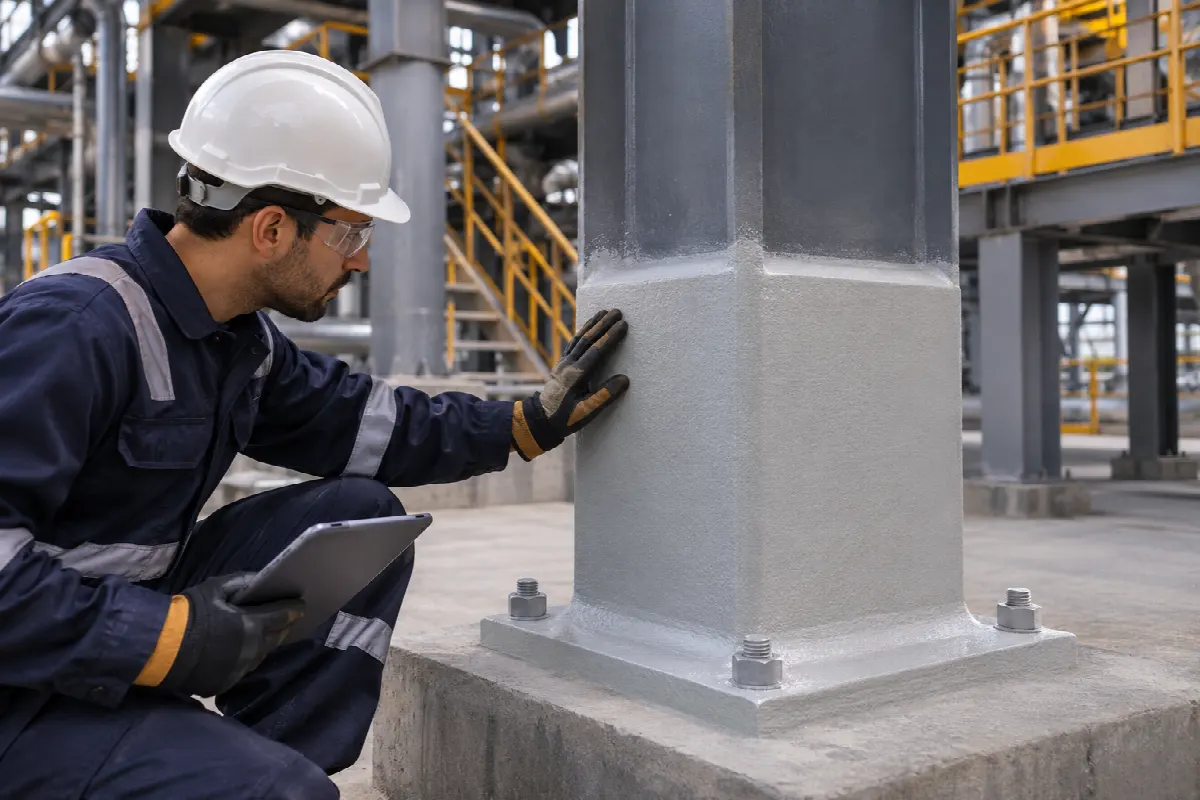
Passive protection can involve different material and construction approaches. Suitability depends on the application and the evidence supporting the proposed system under the relevant conditions. Selection needs to consider the complete arrangement, including the substrate, supporting details, joints and compatible finishes where applicable. A material name alone does not describe how a finished installation will perform, particularly if its configuration differs from the basis used to assess it.
Interfaces deserve careful attention. Connections, edges, penetrations and transitions can affect continuity, access and maintenance. The protective system must also coexist with corrosion protection and other equipment requirements. These relationships should be reviewed together so that one element is not changed without understanding the effect on another. Clear drawings and installation details help communicate the intended arrangement to the people responsible for delivering and inspecting it.
Petrodubai's role in the service conversation is to connect these technical considerations with a defined industrial scope, making the required reviews, responsibilities and project interfaces clear before work progresses.
Preparing for installation and verification
A practical execution plan considers site access, the condition of surfaces, material handling and coordination with other work. Industrial installations often contain areas where several trades depend on the same space or sequence. Identifying these dependencies early helps prevent completed protection from being damaged by later activity and reduces uncertainty about which surfaces are ready for the next stage of work.
Quality checks should follow the approved system requirements and project inspection plan. The relevant evidence may include material identification, substrate preparation, installation details and measurements appropriate to the chosen system. The purpose is to establish that the installed arrangement matches the accepted requirements. Inspection cannot be reduced to a final visual review if important features become concealed during execution.
Changes and nonconformities need a clear technical review route. Recording the issue, the accepted resolution and the resulting condition protects the integrity of the handover information. It also helps future maintenance teams understand what was actually installed instead of relying on an earlier drawing that no longer reflects the asset.

Inspection, repair and continued readiness
Passive fire protection remains part of the asset throughout operation, so its condition needs ongoing attention. Mechanical damage, weather exposure, water entry or later modifications can introduce concerns that were not present at handover. Inspection planning should consider the installation and its environment, with suitable criteria for identifying observations that require technical assessment. The absence of an obvious external defect should not be treated as proof of every aspect of system condition.
Repair decisions need to consider compatibility and the original protection requirement. Replacing a damaged area with a superficially similar material may not preserve the accepted arrangement. Relevant records and manufacturer information can help the responsible technical team determine the appropriate approach. Where the original system is unknown, that uncertainty needs resolution as part of the repair scope.
Good maintenance records link each observation with its location, assessment and completed action. They also capture modifications that affect the protection. This continuity makes future inspections more useful and helps the owner preserve the design intent as the facility changes over time.
Define your industrial fire-protection enquiry
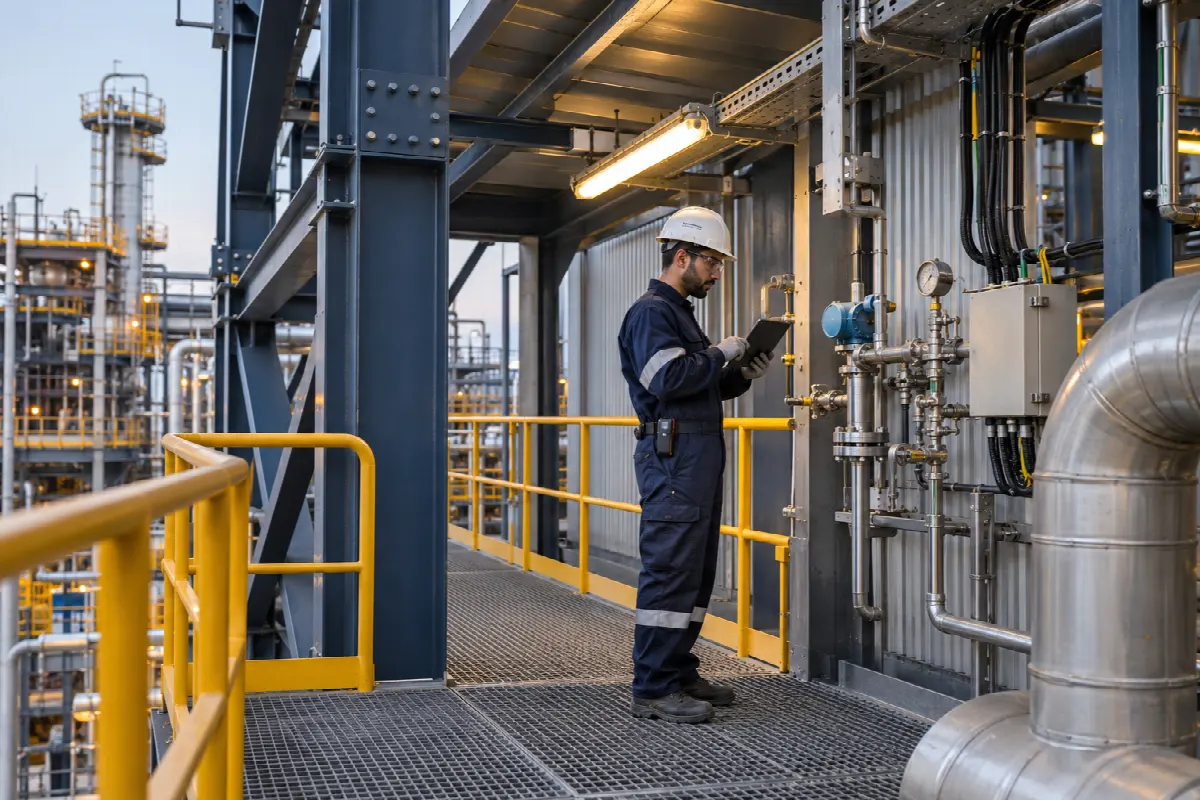
To begin a useful discussion, share the type of structure or equipment, the project stage and the available protection specification. Drawings, existing system records and photographs can help clarify the extent of the requirement. Information about the environment, access and planned shutdown or construction sequence also supports the development of a realistic scope. If the enquiry concerns repairs, include the observed condition and any relevant inspection findings.
Petrodubai welcomes enquiries concerning passive protection needs within industrial facilities. Through the contact page, you can outline the application and the support required so that the next steps can be discussed against a clear technical brief. Defining the requirement carefully supports coordinated engineering, appropriate system review and an installation that can be documented and maintained. It also creates a shared understanding of what needs to be confirmed before procurement or site execution begins.