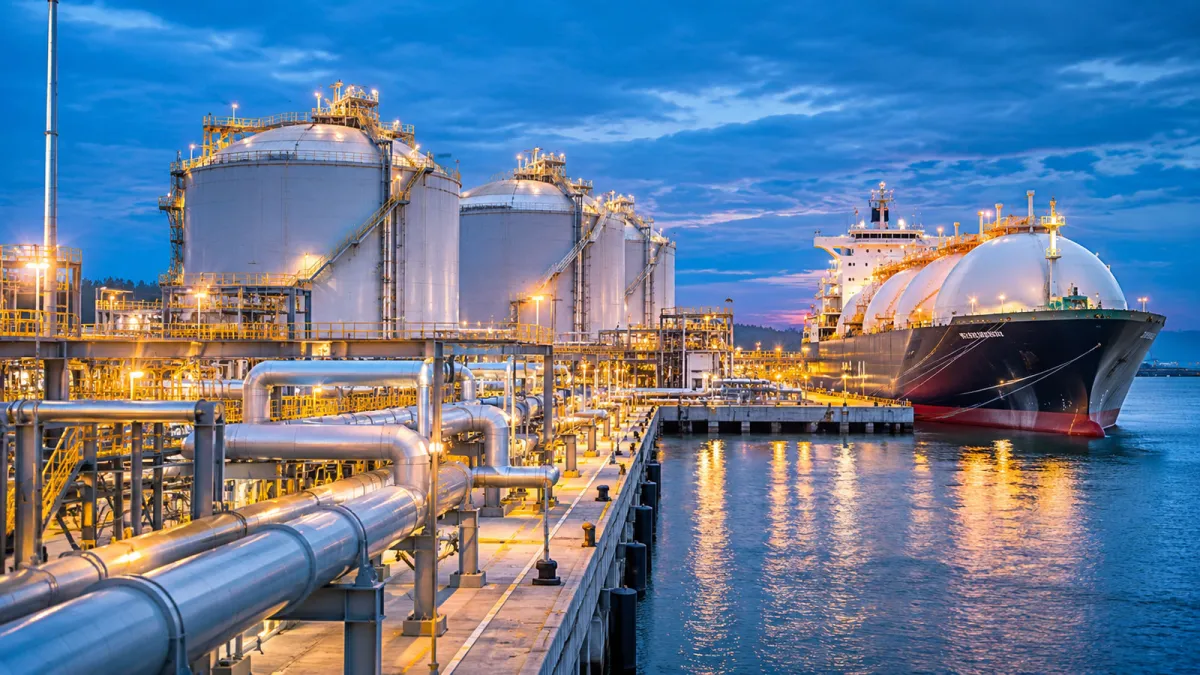

A changing industry starts with existing assets
The future of oil and gas is often described through large investment announcements, new energy technologies and changes in global demand. For the people responsible for running facilities, however, the transition is also a practical engineering challenge. Equipment must remain dependable, maintenance must be planned around real operating constraints, and improvements must be supported by evidence. A useful strategy connects long-term decisions with the condition of the assets already in service.
There is no single pathway that fits every producer, processing plant or industrial customer. The International Energy Agency examines different energy scenarios precisely because policy, technology and demand can develop in different directions. An operator should therefore distinguish a scenario from a forecast. Decisions become more resilient when they are tested against several possible operating conditions, rather than justified by one confident prediction about the market.
Reliability remains the foundation
A facility cannot benefit fully from advanced technology if basic equipment information is incomplete. An accurate asset register, current drawings and a clear understanding of critical equipment provide the starting point. Teams need to know which failures would interrupt production, which components are difficult to replace and where deterioration could affect containment. This allows attention to follow operational consequence rather than the visibility of a particular piece of equipment.
Reliability also depends on coordination between disciplines. A recurring pump problem may involve the process conditions, pipe alignment, maintenance practices or the way the equipment is operated. Replacing the same component repeatedly can address the symptom without resolving the cause. Bringing operating observations, maintenance history and engineering review together helps turn repeated repairs into a more useful investigation. The appropriate response should be determined by qualified personnel familiar with the installation.
Digital monitoring must support a decision
Sensors, remote monitoring and analytical tools can make changes in equipment behaviour easier to identify. Their value depends on what happens after a signal appears. Before introducing a new monitoring system, define the decision it will support: whether to investigate a vibration change, inspect a developing temperature pattern or review a change in process performance. Collecting more data without an agreed response can simply create another stream of information that no one owns.
A manageable pilot is often more informative than an ambitious rollout. Select an asset with a known problem, establish a credible baseline and compare the new information with existing observations. Check missing readings, instrument condition and the effect of changes in operating load. A useful dashboard should explain context as well as display a number. An unusual reading is a reason to investigate, not automatic proof that a failure has been predicted.

Connected equipment needs controlled access
Connecting industrial systems introduces questions about access, system boundaries and recovery. Operational technology has different priorities from an ordinary office application because a disruption can affect a physical process. NIST guidance emphasises the need to account for reliability and safety alongside cybersecurity. Changes should be reviewed with the people responsible for the process, the control system and the network, rather than treated as a software decision alone.
For a project team, practical questions include who can connect remotely, which systems exchange information and how an approved change can be reversed. Equipment inventories and current network diagrams make these discussions more concrete. Vendor support arrangements should also be understood before a system is purchased. A monitoring platform that depends on an undocumented connection can create a maintenance problem of its own, even if its analytical features are attractive.
Efficiency begins with understanding losses
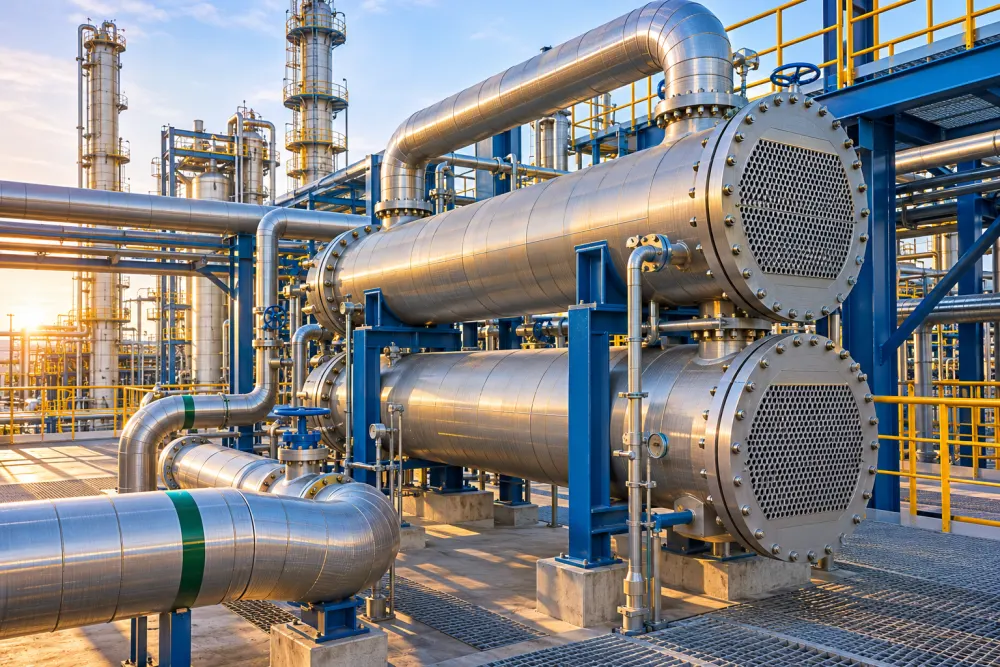
Energy efficiency is most useful when linked to an identifiable operating issue. A plant may have opportunities associated with heat transfer, insulation condition, rotating equipment or utility distribution. The first task is to understand where energy is used and how that use changes with production conditions. Comparing total consumption alone can be misleading if throughput, feed quality or operating mode has changed between the periods being examined.
A credible improvement proposal describes the baseline, the proposed change and the method for checking the result. It also considers maintenance access, equipment compatibility and the consequences of an outage. A measure that appears attractive in isolation may compete with other work for the same shutdown window. Evaluating these dependencies early helps the team choose improvements that can actually be delivered and maintained, rather than simply assembled into an optimistic savings list.
Emissions management requires boundaries and follow-through
Methane management is an important part of the industry's operational agenda. Detection can help locate emissions, but the management process must also include investigation, repair where appropriate and follow-up verification. The IEA identifies substantial opportunities to reduce methane from fossil fuel operations. The exact approach at an individual facility depends on its equipment, operating conditions and applicable requirements; a general industry estimate is not a substitute for a site assessment.
The quality of an environmental claim depends on its boundaries. Teams should distinguish direct operational changes from emissions associated with purchased energy and the wider value chain. They should also explain what was measured and what was estimated. For an engineering project, this means recording assumptions and avoiding promises that exceed the available evidence. A smaller, well-documented improvement is more useful than an impressive claim that cannot be checked.
Asset protection supports longer-term performance
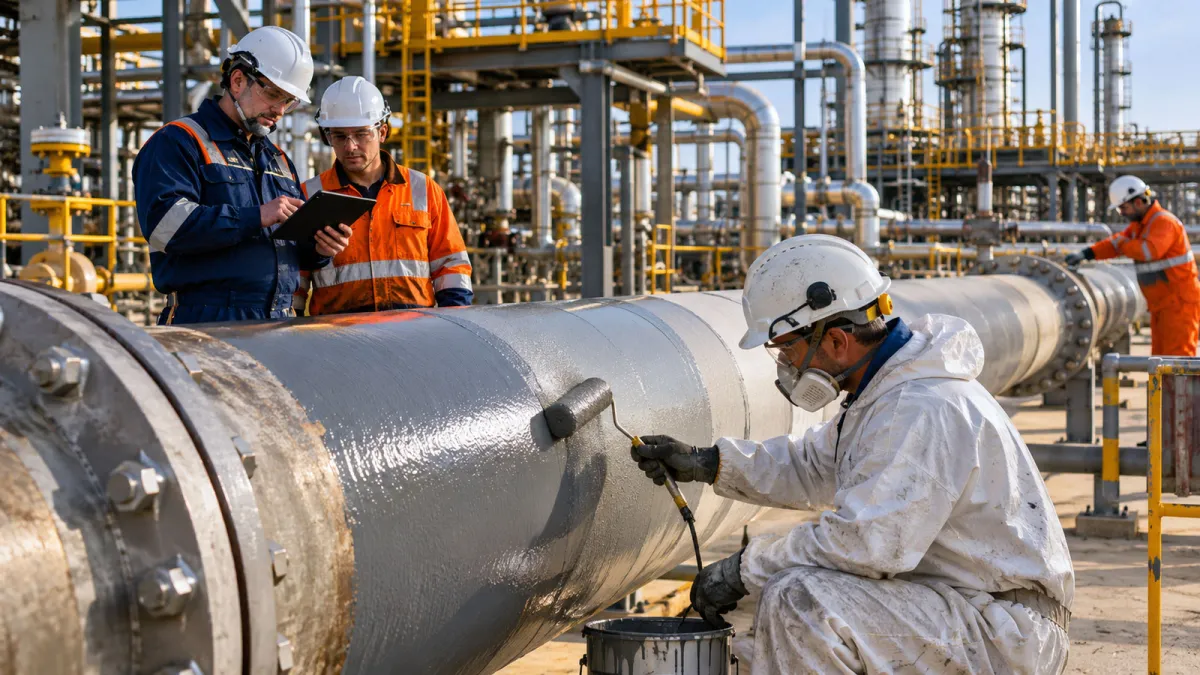
Corrosion protection, maintenance and piping integrity remain relevant even as attention shifts towards new technology. A digital system can indicate an emerging problem, but it does not replace suitable materials, protective systems or competent inspection. Coastal exposure, operating temperature and the accessibility of equipment all influence how protection should be planned. The right solution is tied to the actual environment and the condition of the asset.
Whole-life thinking also changes how proposals are compared. Initial purchase cost is only one consideration. Access requirements, inspection needs, repairability, spare parts and the consequences of future intervention can affect the overall decision. Extending the useful life of suitable equipment may be valuable, but continued service must be supported by an appropriate technical assessment. Age alone does not establish either fitness for service or the need for replacement.
People turn technology into operating practice
New tools introduce new responsibilities. Operators need to understand the meaning and limitations of the information they receive, while maintenance teams need a practical route from an observation to an approved work order. Training should be connected to the tasks people actually perform. A short explanation of a dashboard is not the same as preparing a team to evaluate unusual conditions and escalate concerns correctly.
Knowledge also needs to survive changes in personnel. Documenting why an action was taken can be as valuable as recording what was done. Useful records connect an equipment identifier, the observed condition, the assessment and the outcome. This creates a more reliable basis for future decisions and reduces dependence on individual memory. Clear handovers between operations, engineering and contractors help prevent important context from disappearing at the end of a project.
Building a practical improvement roadmap
A useful roadmap starts with a limited set of problems that matter to the facility. For each one, identify an accountable owner, the information needed and the operational constraints. Separate work that restores a known requirement from work that tests a new approach. This prevents essential maintenance from being postponed while a more visible technology programme absorbs attention. It also makes the reason for each investment easier to explain.
The roadmap should allow learning. Establish review points where assumptions can be tested and unsuccessful ideas can be changed without hiding the result. Define success in terms that relate to operations, such as a better understood failure pattern or a more reliable planning process. When a project is expanded, confirm that the resources, data quality and support arrangements that made the pilot work are still available at the larger scale.
Turning industry trends into useful conversations
For asset owners, the most productive discussion is rarely about adopting every emerging technology. It is about identifying where an engineering change can address a real constraint and what evidence is needed to make that decision responsibly. Reliability, efficiency, emissions management and digital capability overlap, but they should not be treated as interchangeable objectives. Each requires a clear scope and a way to evaluate the outcome.
Petrodubai's service focus includes asset protection, maintenance, industrial piping, marine support and technical assistance. These areas provide a practical starting point for discussing the needs of an existing facility or a planned project. A useful inquiry describes the equipment, its operating environment and the challenge being considered. From that starting point, the conversation can move towards an appropriate scope instead of assuming that a fashionable technology is already the answer.