Offshore exploration is an exercise in reducing uncertainty
Offshore oil and gas exploration combines geological interpretation, specialist equipment and complex marine operations. Its purpose is to build an increasingly reliable understanding of what may exist below the seabed and whether further investigation is justified. Each stage adds information, but it also has limits. A promising geological interpretation does not establish a commercial discovery, and a discovery does not automatically establish a practical development project.
This distinction matters when discussing the technologies used offshore. Survey systems, remote vehicles and digital models are tools for answering specific questions. Their value depends on the quality of the observations and the way the findings are interpreted. A useful exploration plan connects each activity to an uncertainty that needs to be reduced. It also explains what decision will follow the result, rather than treating more data as an objective in itself.
Geological understanding provides the starting framework
Exploration begins with a regional view of the subsurface. Geoscientists consider the formation and movement of hydrocarbons, the characteristics of potential reservoir rocks and the structures that might contain them. Existing studies and nearby observations can guide this work, but they do not eliminate local uncertainty. Conditions can vary over relatively short distances, so an interpretation should distinguish directly observed evidence from assumptions carried across from another area.
The quality of the initial framework influences later decisions. Teams need to know which questions remain open and which observations could materially change the interpretation. This helps define a survey programme that is relevant rather than merely extensive. Clear documentation also allows later findings to be compared with the original reasoning. When a result differs from expectations, the objective is to improve the understanding, not to force the new evidence into an unchanged model.
Seismic surveys provide indirect subsurface information
Marine seismic surveys use acoustic energy and recorded responses to help interpret subsurface structures. BOEM describes geological and geophysical information as an important input to offshore resource evaluation. The resulting data require processing and specialist interpretation; they are not photographs of an underground reservoir. Survey design, environmental conditions and processing choices can influence the information available and the confidence that can reasonably be placed in an interpretation.
A project should therefore define the purpose of the survey and the limitations of the expected result. Resolution, coverage and the question being investigated need to be considered together. More detailed data can improve an interpretation, but they cannot remove every uncertainty about rock properties or fluid content. Review arrangements should make those limits visible to decision makers, especially when technical findings are translated into investment discussions or plans for further activity.
Marine planning determines what can be delivered
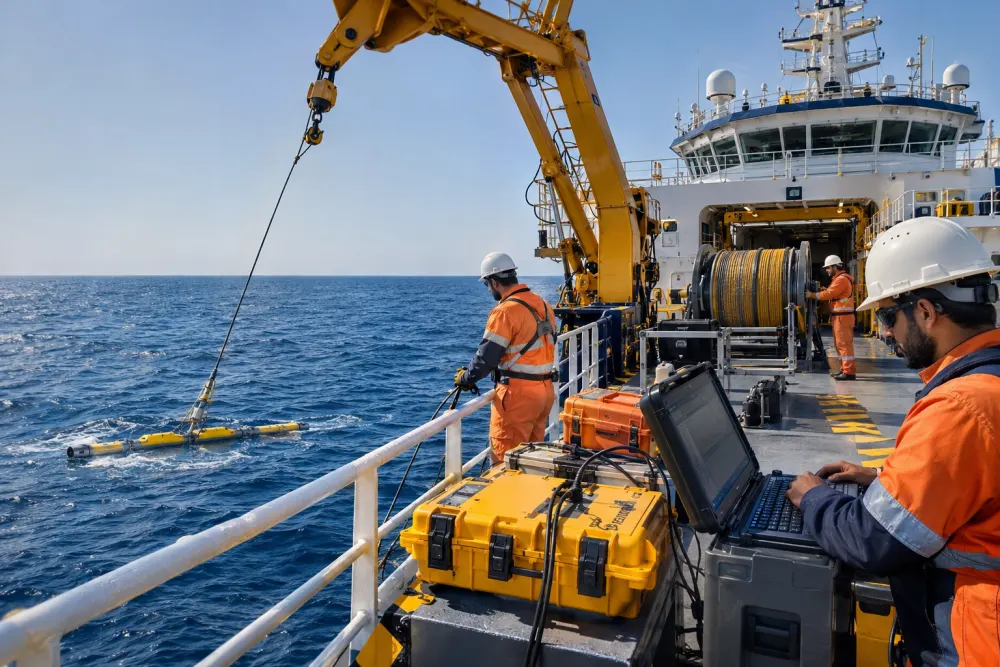
A survey or inspection programme depends on suitable vessels, equipment, personnel and access to the work area. Sea conditions, vessel movements and the availability of support services influence the operating window. These factors should be considered while the technical scope is being developed. A technically attractive programme may need adjustment if its requirements cannot be supported within the practical constraints of the location and the proposed schedule.
Coordination is particularly important where several marine activities share an area. Clear responsibilities and communication arrangements help align the plans of vessel operators, project teams and relevant authorities. Changes should be reviewed through the appropriate processes rather than handled as informal schedule adjustments. An effective plan connects the technical objective with the resources needed to achieve it and identifies the conditions under which work may need to be delayed or reconsidered.
Environmental assessment belongs in project planning
Offshore work takes place in a marine environment with ecological and social considerations. Survey activity, vessel traffic and seabed interaction can require assessment and controls under the applicable jurisdiction. The relevant requirements should be established for the actual location. Rules used in one region should not be assumed to apply unchanged elsewhere, and an industry overview cannot replace the permitting and environmental review required for a specific programme.
Early planning allows environmental considerations to inform equipment choices, timing and operating arrangements. It also helps identify the information needed before a decision can be made. The project should distinguish between measures that are required, measures proposed for a particular risk and assumptions still awaiting confirmation. Keeping these distinctions clear supports constructive discussions with specialists and stakeholders and reduces the likelihood of important constraints appearing only after resources have been committed.
Exploration drilling answers different questions
Where justified and authorised, exploration drilling can provide information that cannot be established through remote surveys alone. It is a separate, highly specialised activity with its own design, safety and environmental requirements. Planning involves much more than selecting a location. Subsurface uncertainty, equipment capability, well integrity and the availability of competent personnel all need consideration within an appropriate engineering and regulatory framework.
The results may change the understanding of the prospect substantially. Data from a well can support further evaluation, but commercial decisions also depend on the wider development context. A technically successful investigation does not guarantee that production will be feasible or economic. Clear communication of what has been established, what remains uncertain and what additional work is needed helps prevent exploration results from being interpreted as promises about a future project.
Subsea technology extends observation and access
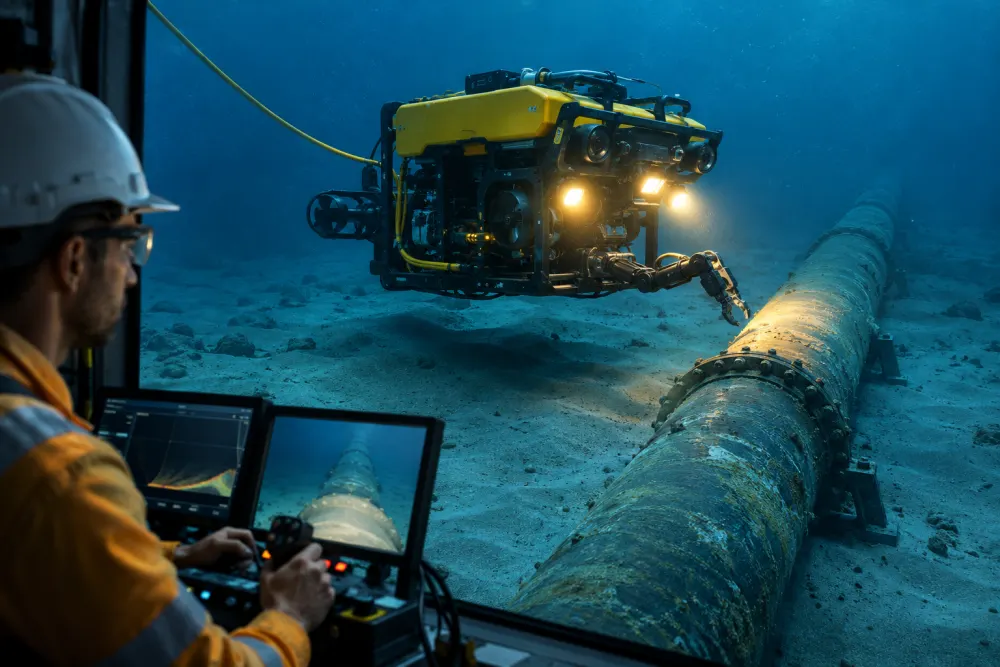
Remotely operated vehicles and other subsea systems can support visual observation, inspection and selected intervention activities. They help teams examine equipment or seabed conditions in environments that are difficult to access directly. The appropriate system depends on the task, water conditions, equipment interfaces and supporting vessel arrangements. A vehicle suitable for observation should not automatically be assumed capable of carrying out a different inspection or intervention scope.
Data quality remains important below the surface. Visibility, positioning and the condition of the observed asset affect what can be concluded. An image may show a local feature clearly while leaving surrounding areas unexamined. Inspection records should identify location and coverage so that later users understand the extent of the observation. This avoids turning a limited survey into an unsupported statement about the condition of an entire subsea system.
Offshore assets face demanding service conditions
Marine exposure influences the design and care of structures, piping and associated equipment. Corrosion protection, mechanical condition and access for maintenance deserve attention throughout the asset lifecycle. The environment can also make apparently small repairs resource-intensive. A component that is straightforward to reach onshore may require extensive planning offshore, so maintainability should be considered before equipment selection and layout decisions are finalised.
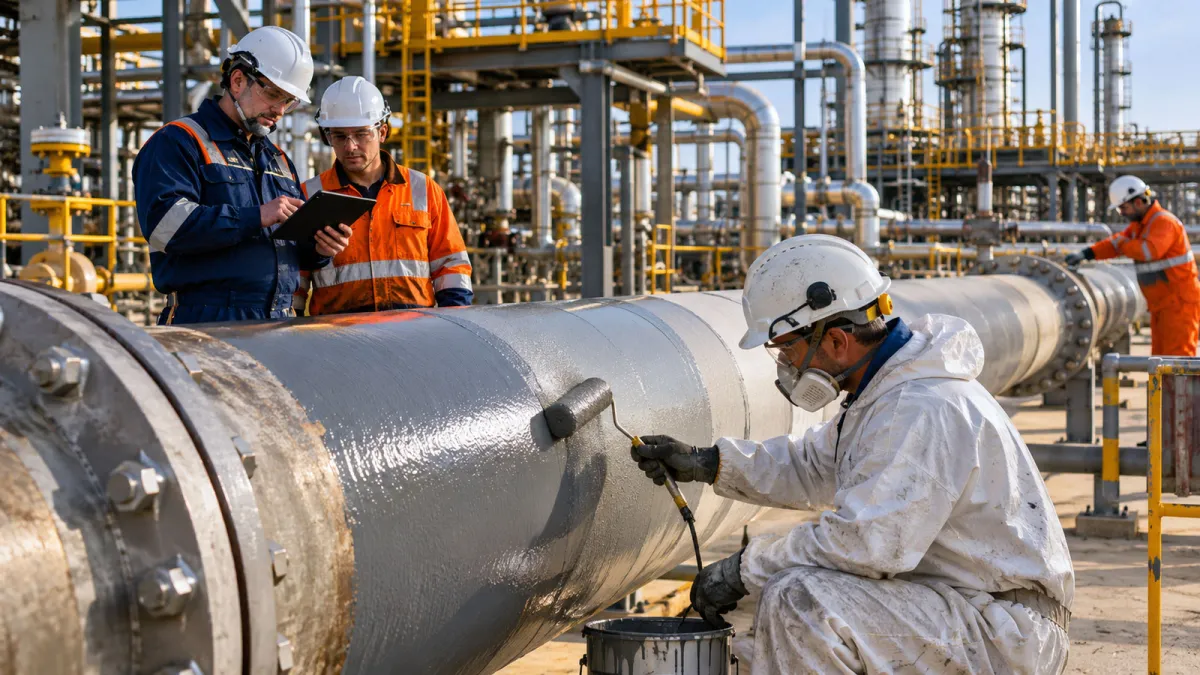
Protective systems need to suit the actual exposure and service. Surface preparation, material compatibility and inspection requirements remain important, while offshore access and weather can add further constraints. Maintenance planning should connect condition findings with a realistic intervention opportunity. Identifying a problem is only part of the process; the organisation also needs the information, resources and authorisation necessary to turn that finding into appropriate work.
From discovery to development requires a wider assessment
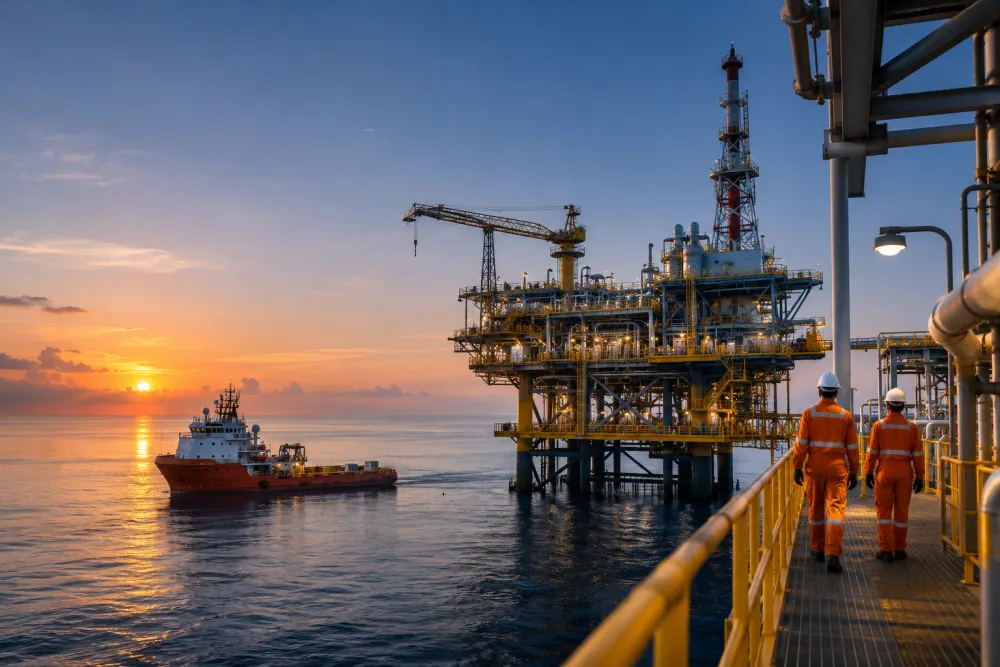
Moving from exploration towards development introduces questions about production systems, processing, export routes and long-term support. The suitability of an offshore resource cannot be considered independently of the infrastructure needed to use it. Distance, water depth, operating conditions and available connections can affect the possible development concepts. These factors need to be examined alongside subsurface information rather than added after a preferred concept has already been selected.
The assessment should also consider how the installation would be maintained and eventually taken out of service. Decisions made early can influence access, inspection and future intervention costs. Comparing concepts on initial construction requirements alone may overlook important lifecycle differences. A balanced review makes technical assumptions and uncertainties visible so that the chosen path reflects a considered view of the whole project, not simply the most optimistic interpretation of one element.
Define the support requirement precisely
An offshore-related inquiry should explain the asset or activity involved, the location, the available information and the support being considered. It should distinguish exploration services from maintenance, protection, marine infrastructure or general technical assistance. These are related fields, but they require different capabilities and responsibilities. A precise description helps the client and potential service provider establish whether the proposed scope matches the support actually required.
Petrodubai's stated service areas include offshore and marine support, protective systems, industrial piping and technical assistance. These areas can form a starting point for discussing infrastructure and asset-care requirements without implying responsibility for every aspect of an exploration programme. Offshore technology is valuable when it answers a well-defined question. The same principle applies to project support: dependable work begins with a clear scope, appropriate expertise and a shared understanding of the conditions in which it will be delivered.