
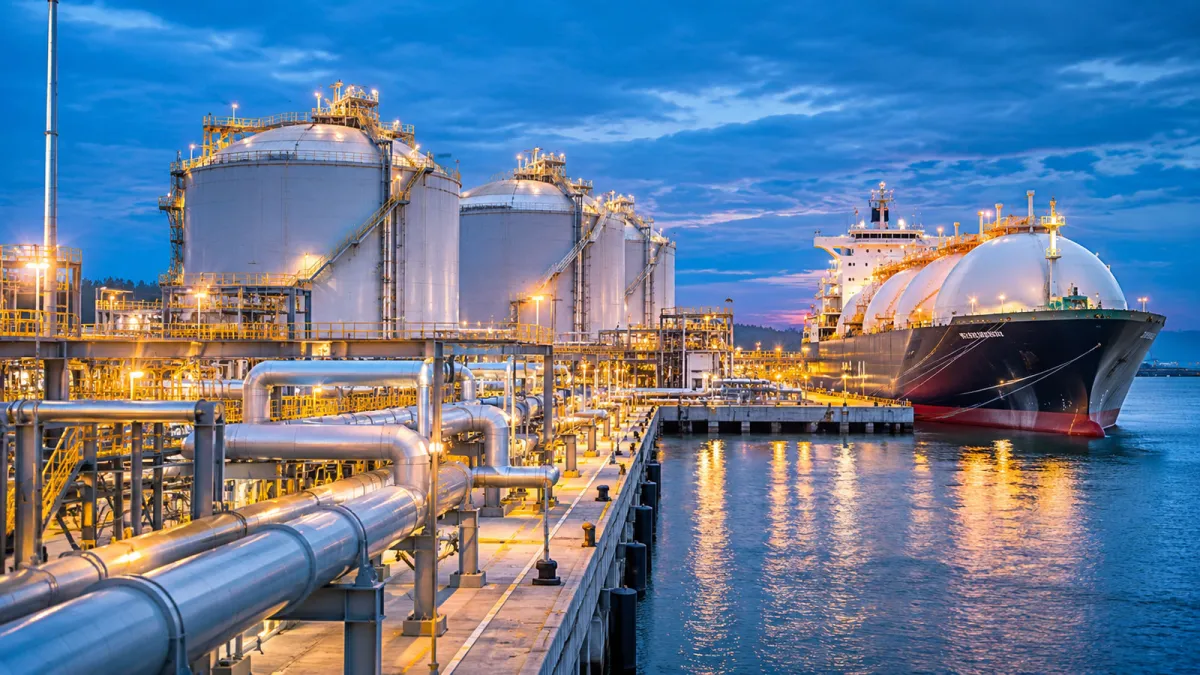
Why LNG matters to the gas supply chain
Liquefied natural gas makes it possible to move natural gas between markets that are not connected by a pipeline. The technology combines gas treatment, refrigeration, specialised storage, marine transport and regasification into one supply chain. Its significance is not limited to the liquefaction plant. Every connection between these stages affects how reliably a cargo can reach the customer and become usable gas.
The US Department of Energy explains that natural gas is cooled to approximately minus 162 degrees Celsius to produce LNG. In its liquid form, it occupies roughly one six-hundredth of the volume of the gas. These characteristics make long-distance marine transport practical, but they also introduce demanding requirements for equipment and infrastructure. Understanding LNG therefore requires looking at both its commercial flexibility and the engineering conditions that make the chain possible.
Liquefaction is a process, not simply a storage choice
Before natural gas enters the liquefaction process, it must be treated to meet the requirements of the facility. The feed composition matters because components such as water and carbon dioxide can create problems at very low temperatures. The treatment arrangement is designed around the incoming gas and the selected process. It should not be assumed that every gas stream can be handled by an identical plant configuration.
Liquefaction then uses refrigeration equipment to remove heat from the treated gas. For the asset owner, the important point is that refrigeration performance depends on an interconnected system. Compressors, heat exchangers, utilities, controls and maintenance arrangements all contribute to availability. A discussion about capacity should therefore distinguish between a design figure and what a facility can sustain under its actual feed, ambient and operating conditions.
The supply chain must be considered as a whole
A liquefaction train does not operate independently of the infrastructure around it. Feed-gas availability, storage space, loading arrangements and vessel schedules influence the movement of product. A constraint in one part of the chain can affect the others. For example, a commercial schedule may assume that a vessel can berth promptly, while the practical plan also needs to account for port access and terminal readiness.
This makes interface planning a central project activity. The parties responsible for the plant, storage, jetty, vessel and receiving terminal need a shared understanding of their boundaries. Equipment descriptions alone do not establish compatibility. Communication arrangements, responsibilities and the information needed before a transfer should be defined through the relevant operating and safety processes. These details are essential to a workable supply chain, not administrative additions after construction.
Storage requires management of heat entering the system
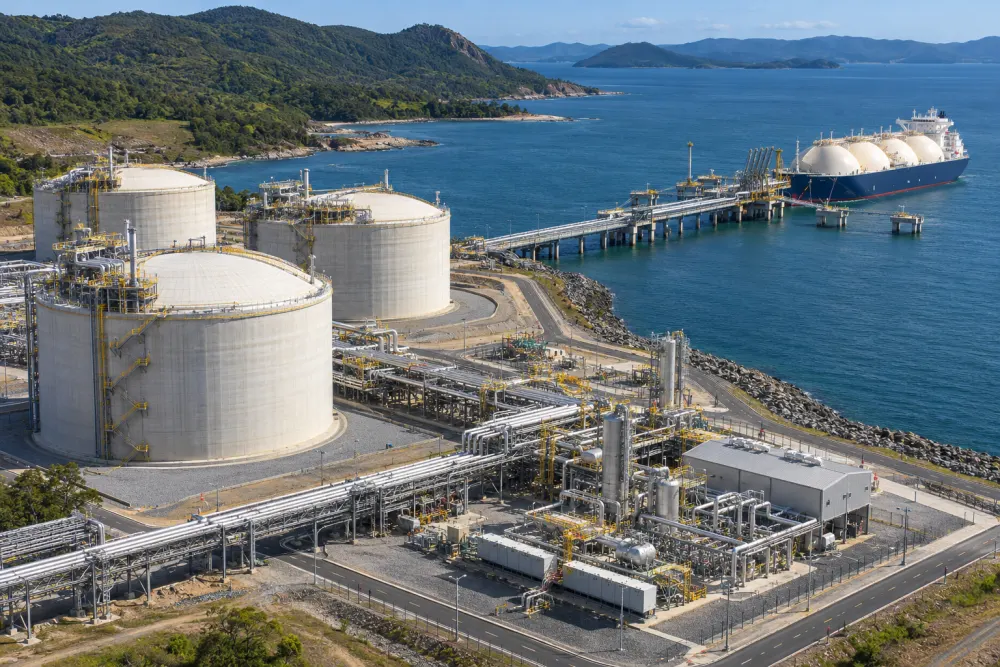
Insulated storage reduces heat transfer, but it does not eliminate it. Some LNG can vaporise as heat enters the system, producing boil-off gas. Its management is part of the facility design and operating strategy. The suitable arrangement depends on the installation, its process connections and the way the storage is used. General descriptions should not be treated as operating instructions for a particular tank.
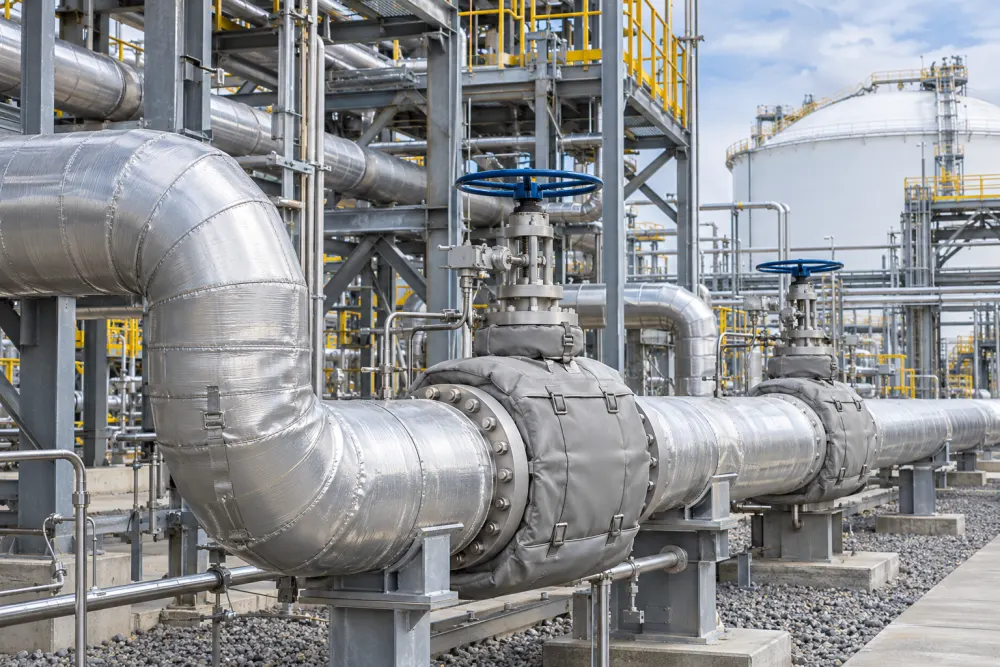
For maintenance planning, insulation and protective systems deserve attention as complete assemblies. External jackets, penetrations, supports and surrounding equipment affect access and condition assessment. A small visible defect may need to be considered alongside the asset's history and operating conditions. Teams should know what information an inspection can establish and where further investigation is required. Appearance alone cannot confirm the condition of every part of an insulated system.
Marine transport connects engineering with logistics
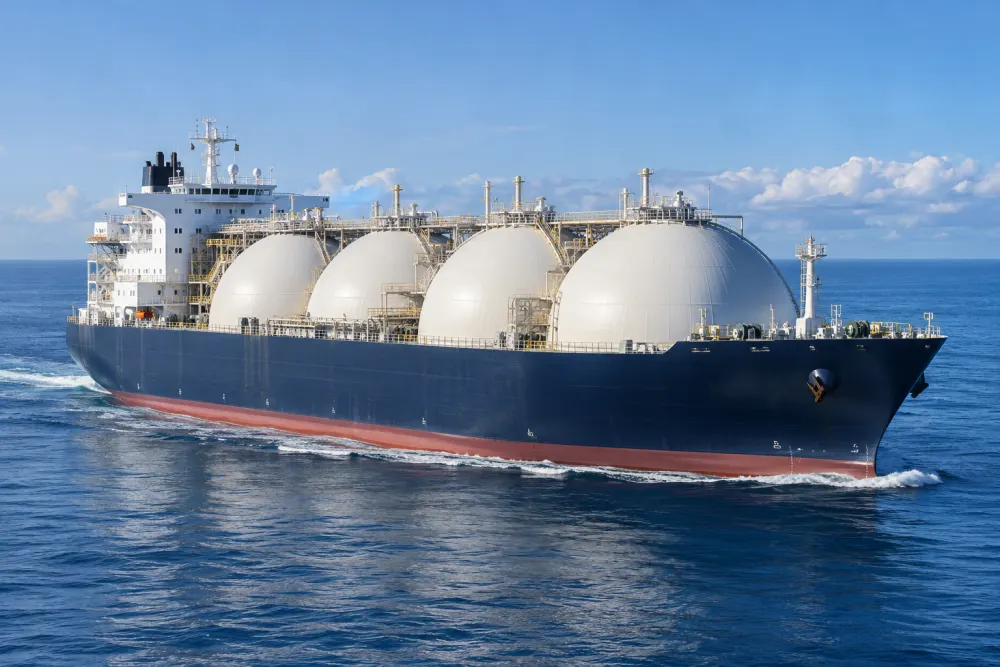
LNG carriers provide the specialised containment and support systems needed to transport the cargo at low temperature. The vessel is one part of a wider marine operation involving terminal infrastructure, port services and coordinated movements. The existence of a shipping route does not by itself establish that every vessel can use every terminal. Project planning needs to account for the requirements of the actual receiving and loading facilities.
Reliable logistics also depend on how interruptions are handled. Weather, maintenance and changes in demand can affect a schedule, so commercial and technical teams benefit from discussing the same assumptions. A project that considers only the nominal voyage duration may overlook important practical constraints. For an equipment supplier or service provider, clarity about the location of the work and the relevant operating window is necessary before a realistic scope can be agreed.
Regasification returns LNG to a usable gas supply
At the receiving end, LNG is warmed so that it returns to its gaseous form. It can then enter the receiving gas network or supply an appropriate end user, subject to the required conditions and quality controls. Regasification infrastructure may be shore-based or associated with a floating installation. The choice involves site conditions, infrastructure needs and the way the receiving market expects to use the capacity.
The terminal and the downstream network must be considered together. Delivery pressure, gas quality and the ability of the receiving system to accept flow all matter to the overall arrangement. An import facility does not create demand or distribution capacity by itself. A useful feasibility discussion therefore includes the destination of the gas, the infrastructure already available and the work needed to connect the proposed terminal to its intended customers.
Cryogenic service changes equipment decisions
Very low operating temperatures make material selection and mechanical design especially important. Components suitable for an ordinary industrial application should not be assumed suitable for LNG service. The relevant design basis, material properties, equipment documentation and applicable requirements need review by competent specialists. This applies not only to major equipment but also to valves, joints, supports and the components that connect one system to another.
Maintenance arrangements should reflect these service conditions. Access, inspection, isolation and return-to-service requirements need to be understood within the site's approved procedures. A general article cannot establish a safe intervention method. For procurement and planning, the practical lesson is to identify the service clearly and obtain the appropriate technical information before comparing products. Describing an item only by its size or appearance leaves out much of what determines its suitability.
Efficiency and environmental performance need context
LNG expands the options for transporting gas, but liquefaction, shipping and regasification require energy. Environmental comparisons should account for the boundaries of the analysis, including upstream operations and methane emissions where relevant. It is misleading to describe an LNG chain as having a single universal environmental result. Feed conditions, equipment performance, transport distance and the energy sources used can change the assessment.
For a facility team, a useful starting point is to understand its own operating data and opportunities for improvement. Energy use should be assessed against the amount and conditions of product handled. Changes in load or ambient conditions can affect a comparison. The objective is to establish a credible baseline and evaluate a defined improvement, rather than to repeat a broad claim about the technology without explaining the assumptions behind it.
Maintenance planning supports commercial reliability
An LNG project may be discussed in terms of supply commitments, but those commitments depend on physical equipment. Maintenance planning needs to connect asset condition, spare parts, specialist support and the operational consequences of an outage. A component with a long replacement lead time can deserve attention even when it is not the largest item in the plant. Criticality should be assessed in the context of the system it supports.
Records help bring the right information into that assessment. Equipment identifiers, drawings, maintenance findings and changes to operating conditions should be linked clearly enough to support future decisions. Inspection findings are more useful when they lead to an accountable review and an agreed action. The aim is not simply to accumulate documents, but to make the current understanding of an asset available to the people who plan and authorise the work.
A stronger starting point for an LNG-related project
A practical project brief explains the role of the equipment in the LNG chain, the service conditions and the limits of the proposed work. It should identify the interfaces with existing systems and the information that still needs confirmation. Commercial expectations, access constraints and possible shutdown requirements belong in the same conversation. Early clarity reduces the risk of comparing proposals that quietly assume different scopes.
Petrodubai's wider industrial focus includes protective systems, piping, maintenance, marine support and technical services. Where an inquiry relates to LNG infrastructure, the specific application and technical requirements should be established before any scope is confirmed. Sharing the project context allows a meaningful discussion about the support required. LNG technology connects distant markets, but dependable project work still begins with careful attention to the individual assets, interfaces and people that make the connection function.